
Overview
Avify Dose is a phantom feasibility study of two-evaluation dose envelopes for boron-uptake uncertainty in BNCT. Its reported total-dose envelopes are empirical; the study does not establish a continuum-wide certificate or a clinical plan acceptance test.
The reproducibility package contains recorded transport results and a standard-library numerical audit. The audit re-derives quantities from tally means and standard errors and checks selected manuscript values; it does not establish physical accuracy or prove the total-dose bound.
The problem
BNCT uses a neutron-capture agent concentrated in tumor tissue, followed by neutron irradiation. The capture reactions produce high-linear-energy-transfer particles over a short range, so the agent’s spatial distribution is central to dose estimation.
A finite set of simulated inputs cannot by itself establish dose limits over a continuous range. The manuscript studies empirical envelopes and also states a conditional component-bound argument with explicit assumptions.
Photon-response approximations, fast-component remainders, simultaneous statistical coverage, and the historical composite transport comparison remain unresolved. The recorded validation grade is INCOMPLETE-VALIDATION.
The plan and neutron source are fixed. This proposed illustration describes varying capture-agent distributions, not a validated continuum-wide dose bound.
Proposed approach
The study evaluates a modified Snyder phantom feasibility case and reports empirical dose envelopes for a declared range of boron uptake.
Its public package preserves the recorded results, protocols, scripts, and numerical audit. The evidence is limited to those records and does not establish clinical workflow suitability or a certified total-dose guarantee.
The proposed method would bound each dose component using an established direction of change or a specified remainder bound, then combine components by region of interest.
- Define the uncertainty.Specify the boron-uptake values and phantom configuration represented by the study.
- Report empirical envelopes.Calculate and report dose envelopes for the designated evaluations without presenting them as a continuum-wide certificate.
- Record the result.Preserve recorded tallies, assumptions, analysis scripts, and results for review and reproduction.
Potential applications
The study provides a reproducible numerical case for examining empirical dose envelopes under boron-uptake uncertainty.
Additional source-resolved photon analysis, statistical coverage work, representative spatial-dose tests, and transport validation would be needed before making broader claims.
Current status
The modified Snyder phantom feasibility manuscript was submitted to Applied Radiation and Isotopes on September 18, 2026 (ARI-D-26-01799). The manuscript and versioned reproducibility package are available.
The package reports 93/93 numerical audit checks, while explicitly retaining INCOMPLETE-VALIDATION. Passing those arithmetic and manuscript-consistency checks does not prove physical accuracy, a total-dose guarantee, or clinical validation.
Avify Dose is not a clinical product and has not been clinically validated or approved by a regulator. No improvement in patient outcomes has been demonstrated.
Resources
The submitted phantom feasibility study, its limitations, and the versioned code and recorded results.
Read the studyDiscuss the method, its limitations, or a possible collaboration.
Contact Avila LabsTechnical figures
Figures from the patent-pending technical disclosure. They describe the proposed system, workflow, and illustrative cases; they are not validation results.
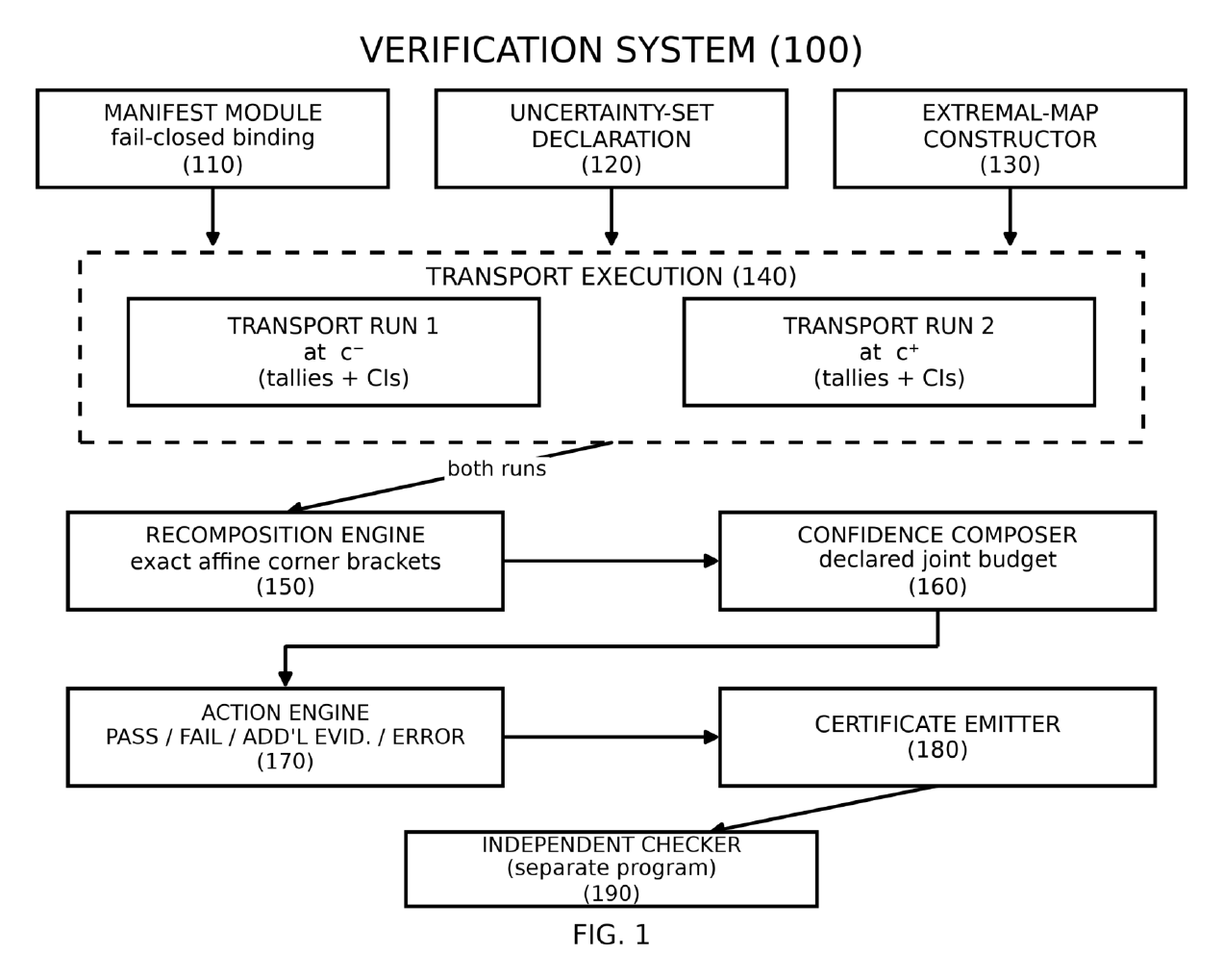
Proposed system architecture for manifest binding, uncertainty-set declaration, designated transport runs, dose recomposition, and independent checking. Certificate emission is a design goal, not a validated capability.
Full size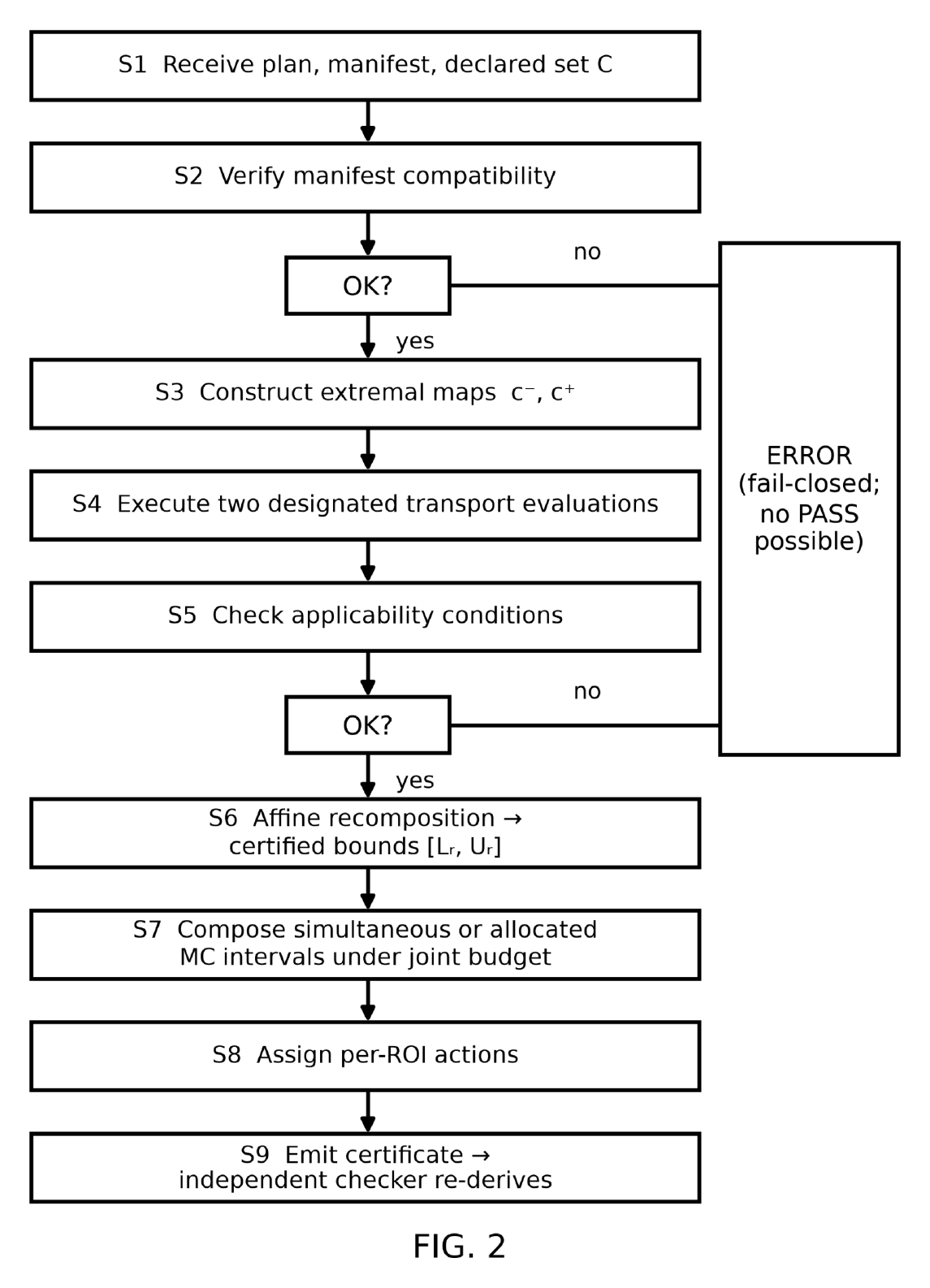
Proposed workflow from input and manifest checks through designated transport evaluations, candidate bounds, and independent review. The feasibility study does not establish certified total-dose bounds.
Full size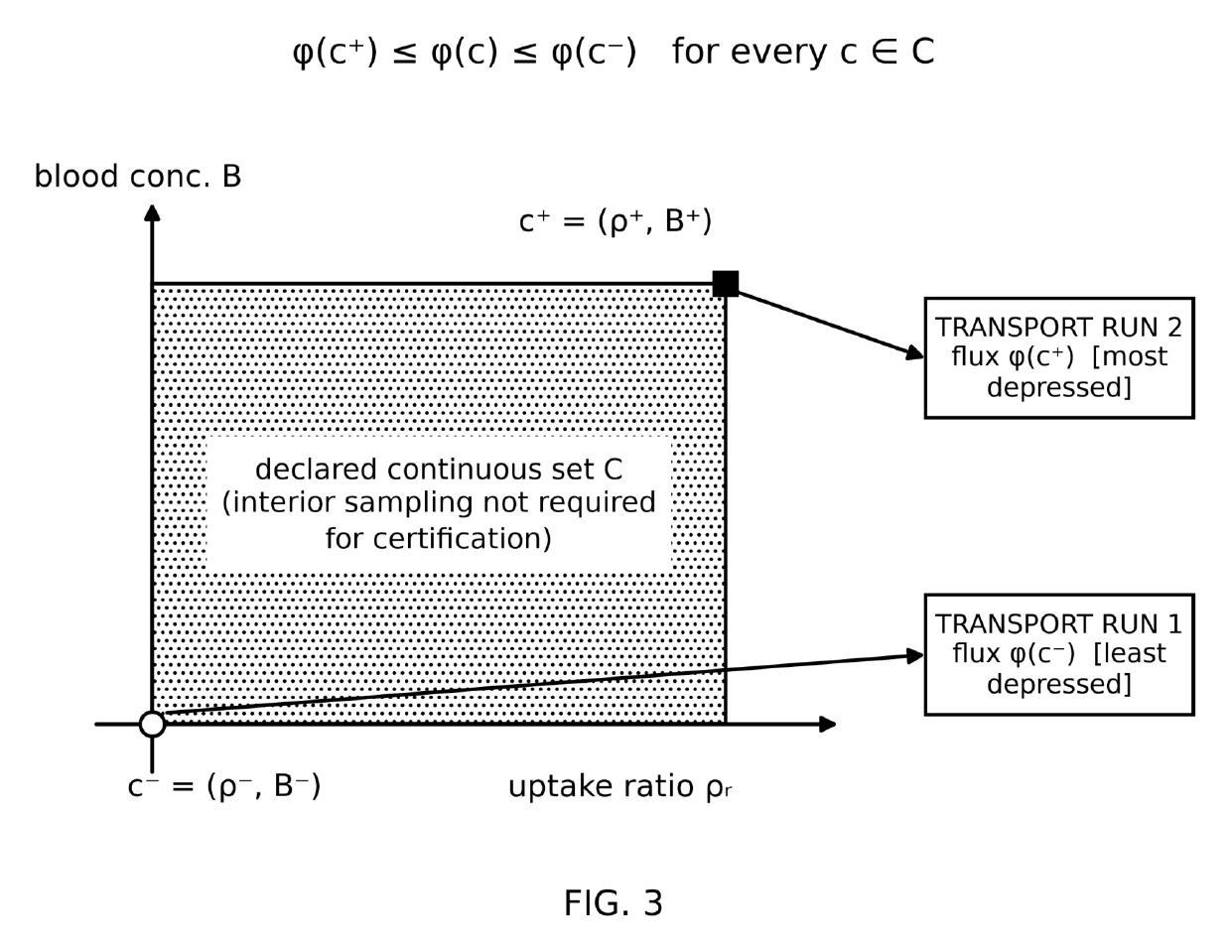
Illustrative uncertainty set for uptake ratio and blood concentration with two designated evaluations. The plot describes a proposed bounding approach and does not establish coverage of the entire set.
Full size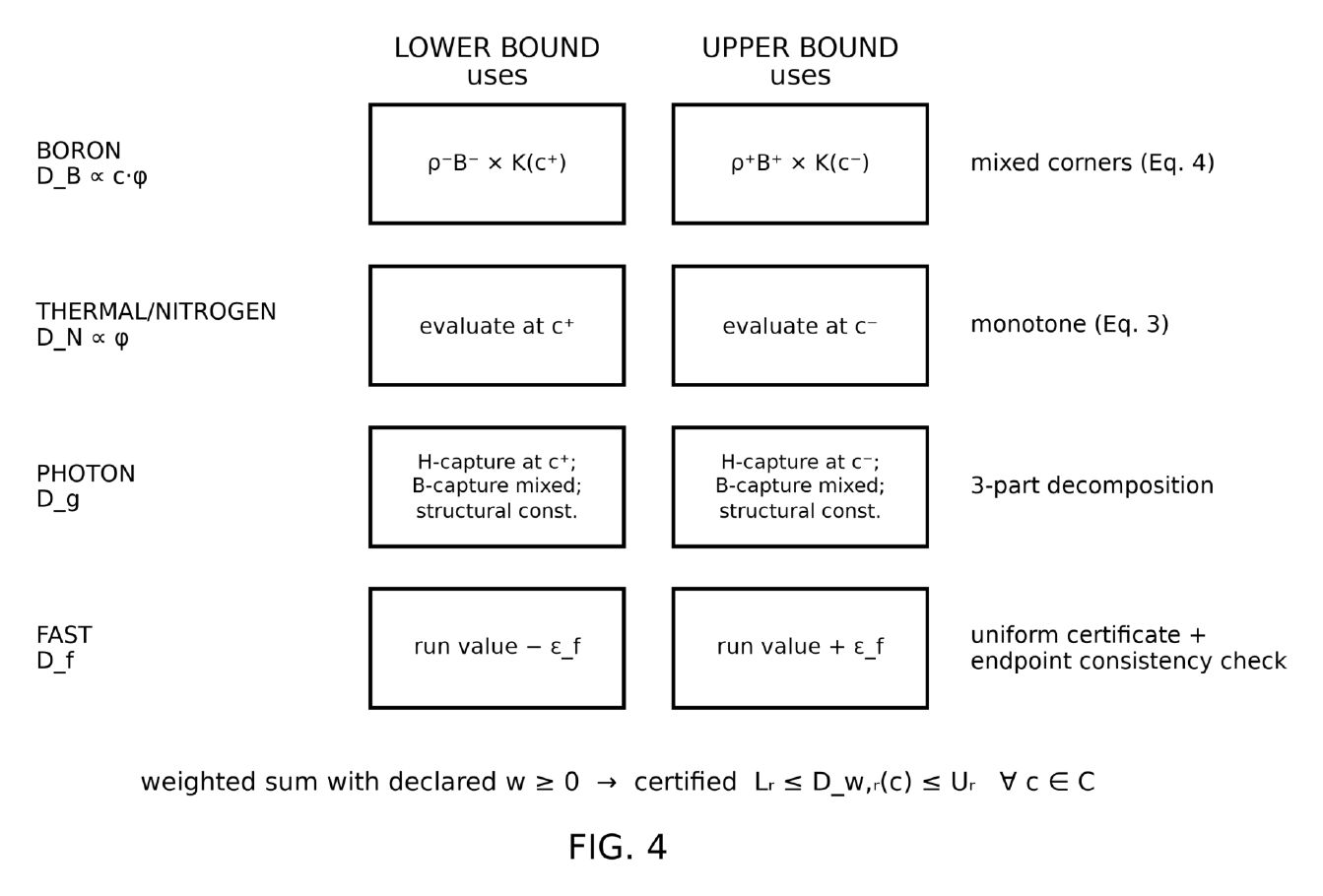
Proposed dose-component recomposition for boron, thermal and nitrogen, photon, and fast-neutron terms. Several component bounds and their joint coverage remain unresolved in the study.
Full size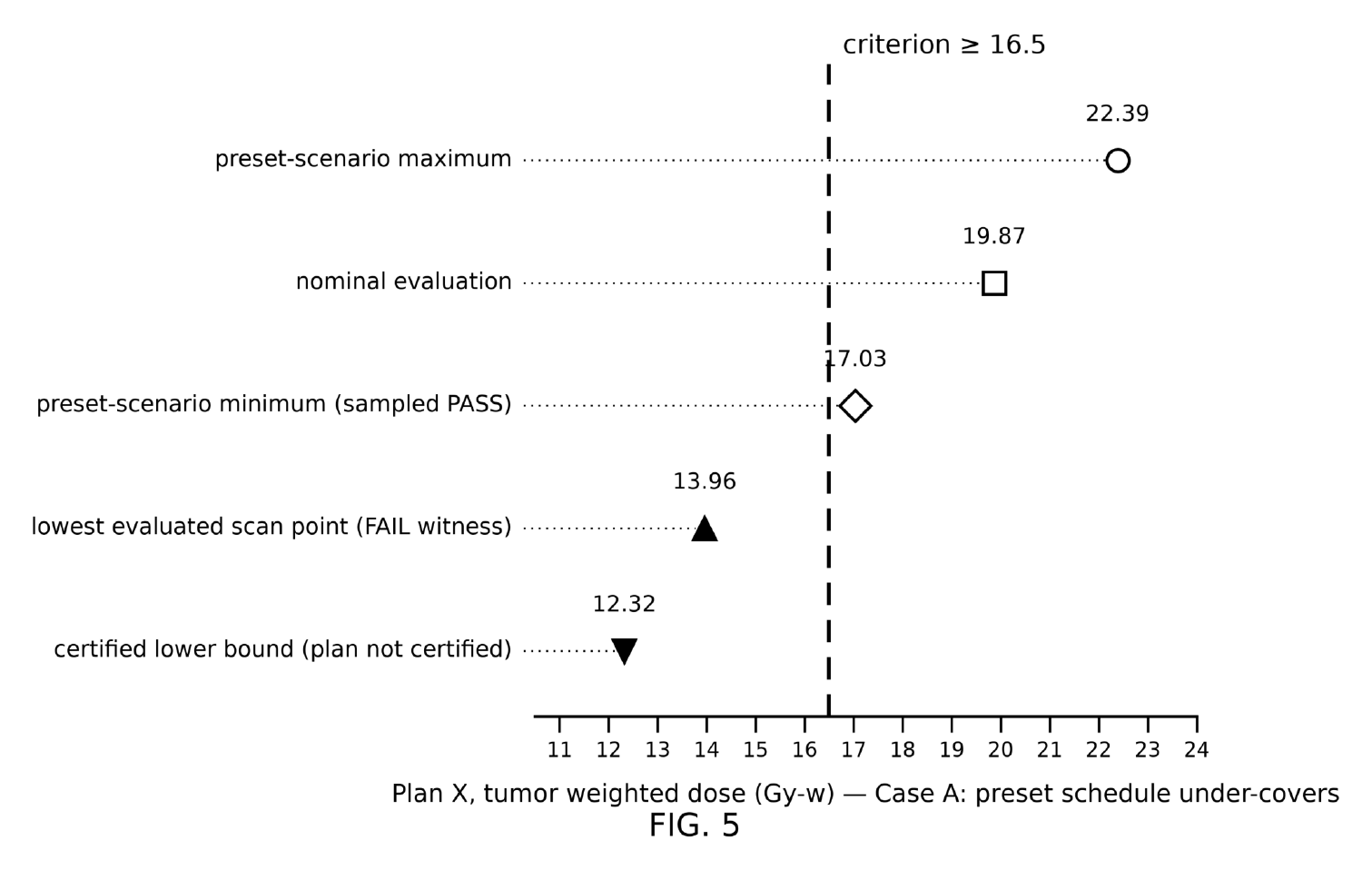
Illustrative tumor-dose case in which sampled presets appear acceptable while the candidate lower envelope does not establish coverage.
Full size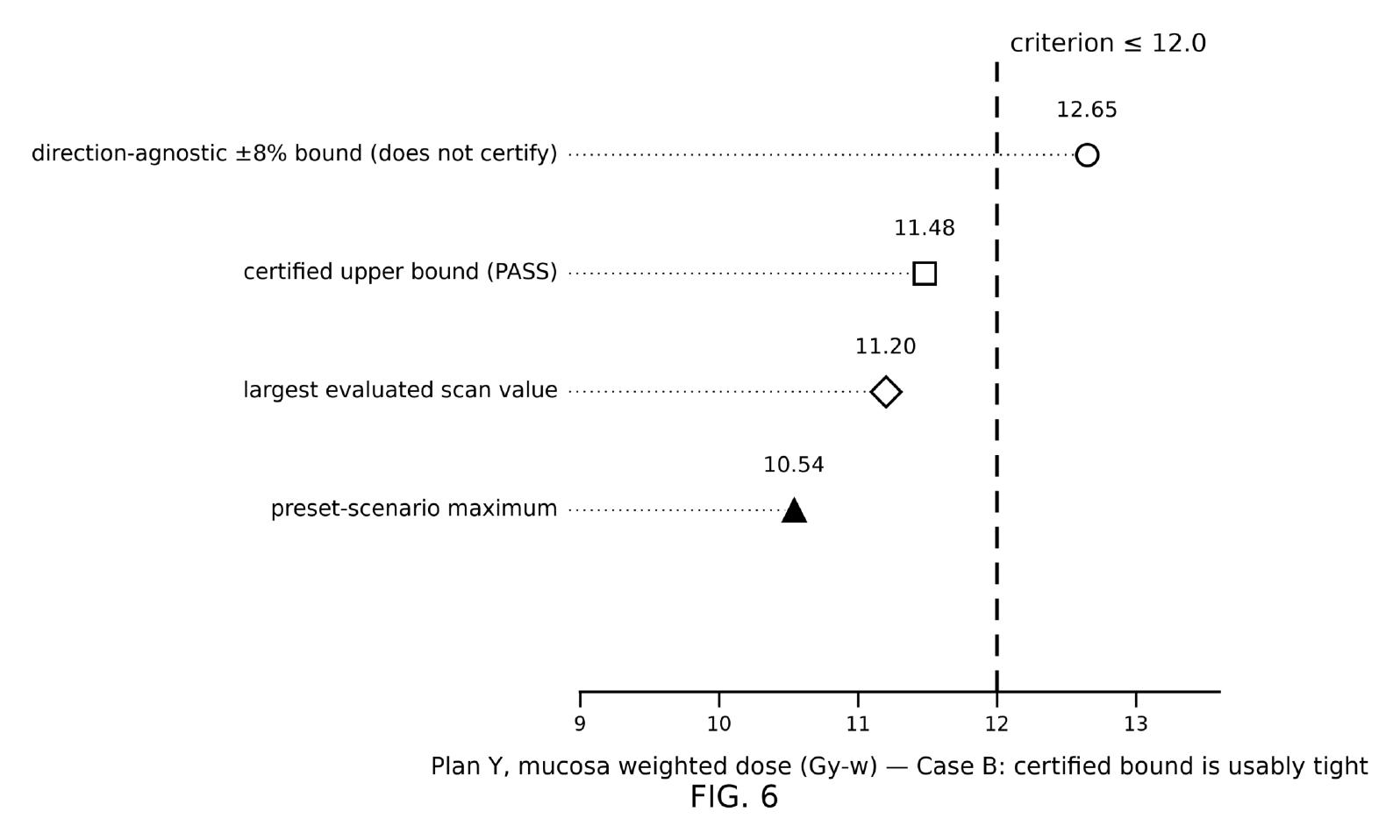
Illustrative mucosa-dose case in which a conditional upper envelope lies below the displayed limit; this example is not clinical validation or a certified total-dose result.
Full size