
Overview
Avify Shield is an early-stage research proposal for bounding radiation-shielding responses over ranges of material-composition and manufacturing uncertainty. Fusion shielding is one intended application; the method has not yet been implemented as a validated capability.
A design calculation uses specified material properties. Manufactured material can vary within the allowed tolerances, changing the shielding response.
The problem
Shielding calculations often use a nominal material composition. Variations in the constituent fractions can change the response, and the direction of that change may differ between quantities.
In fusion systems, high-energy neutrons make shielding and material selection demanding. A calculation at the nominal composition does not establish the response across the full tolerance range.
The question is whether the required response limits hold for every composition allowed by the material specification.
Geometry, source, and scoring definitions are fixed. The proposed calculation aims to cover compositions permitted by manufacturing or assay tolerances.
Proposed approach
The proposed method defines the allowed material set from specifications or an uncertainty model. It then seeks conservative bounds for selected shielding responses over that set.
The calculation would return the response bounds, allowed composition range, and assumptions for engineering review.
The proposed method would establish the direction of change for each response separately and reject unsupported bounds.
- Define the material range.Specify the permitted composition and manufacturing variation.
- Calculate response bounds.Seek conservative limits for the selected shielding quantities.
- Document the calculation.Provide the bounds and assumptions for independent review.
Potential applications
If implemented and validated, the method could support design review and procurement decisions by testing response limits against material tolerances. It could help identify where tighter material control or additional margin is needed.
Fusion shielding motivates this work. The same question also arises in other shielding applications where composition is uncertain.
Current status
Avify Shield is patent-pending, early-stage research. The current work defines the proposed method. Next steps include implementation, benchmarks, sensitivity analysis, comparison with established transport calculations, and specialist review.
Avify Shield is not a validated commercial capability or a certified shielding design. It does not establish that a configuration meets a safety requirement.
Resources
The proposed uncertainty model, calculation, and verification criteria.
ForthcomingDiscuss the method, its limitations, or a possible collaboration.
Contact Avila LabsTechnical figures
Figures from the patent-pending technical disclosure. They describe the proposed system, workflow, and illustrative cases; they are not validation results.
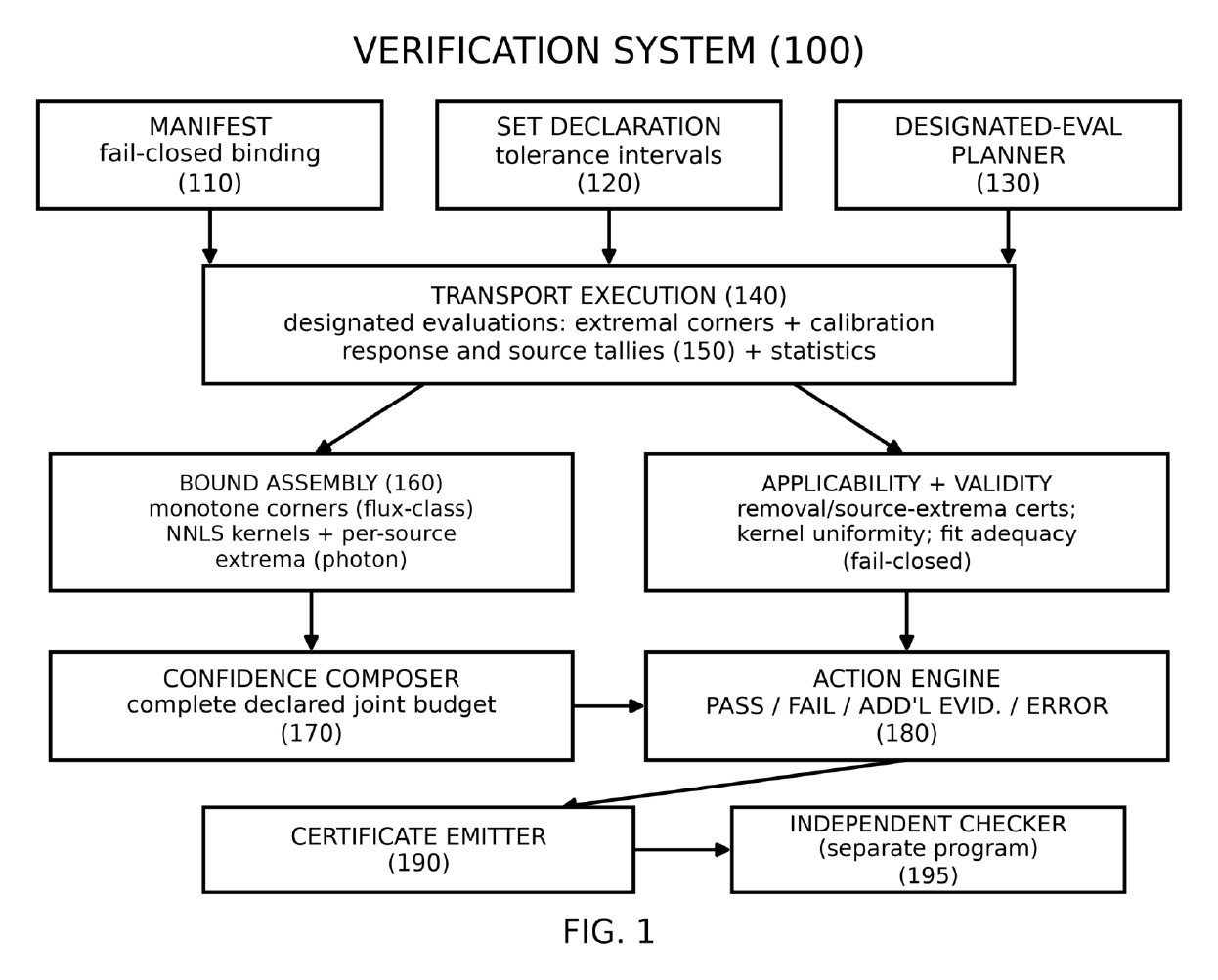
Proposed system architecture for declared tolerance intervals, designated transport evaluations, response-bound assembly, and independent review. Certificate emission is a design goal, not a validated capability.
Full size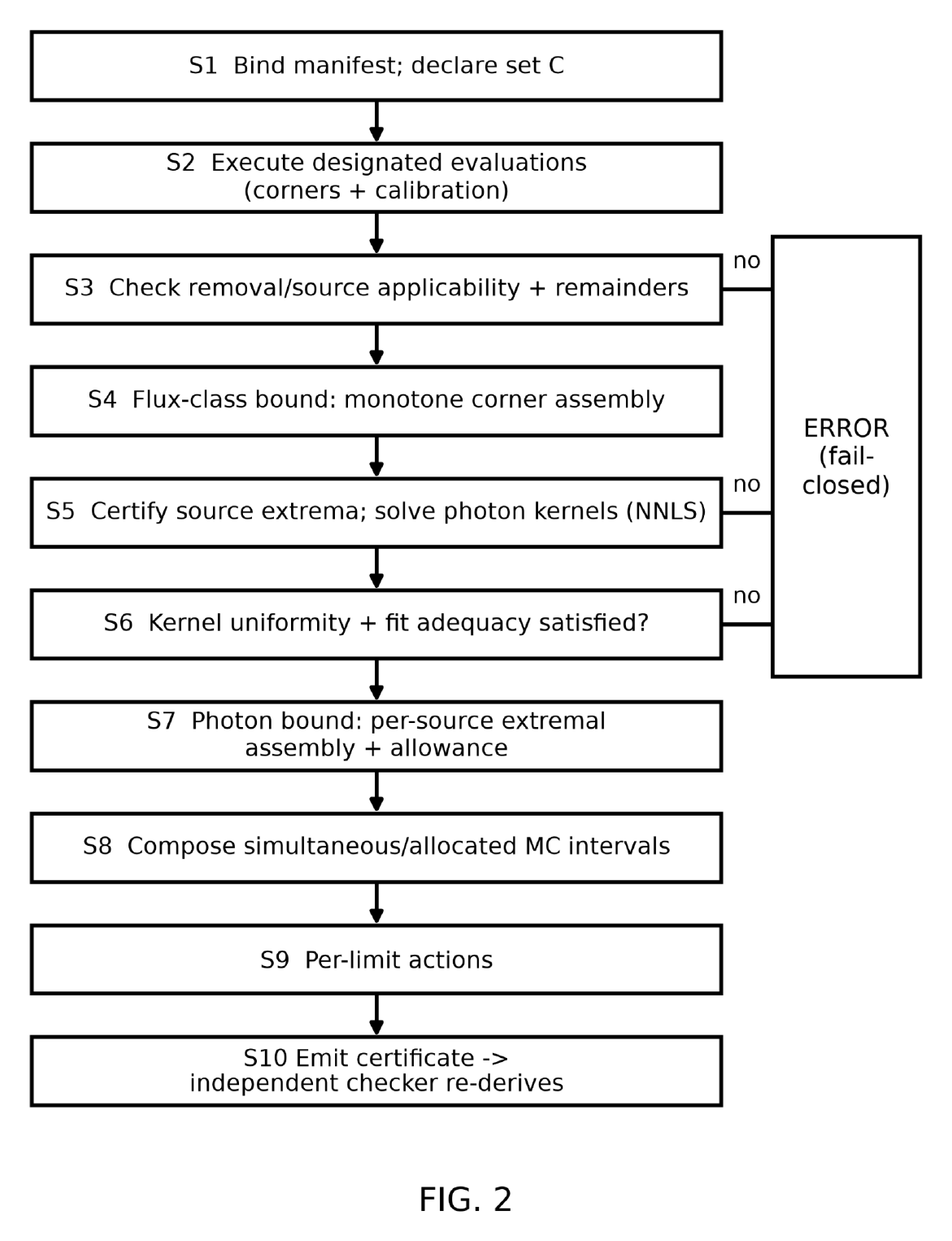
Proposed shielding workflow from manifest binding and designated evaluations through candidate response-bound assembly.
Full size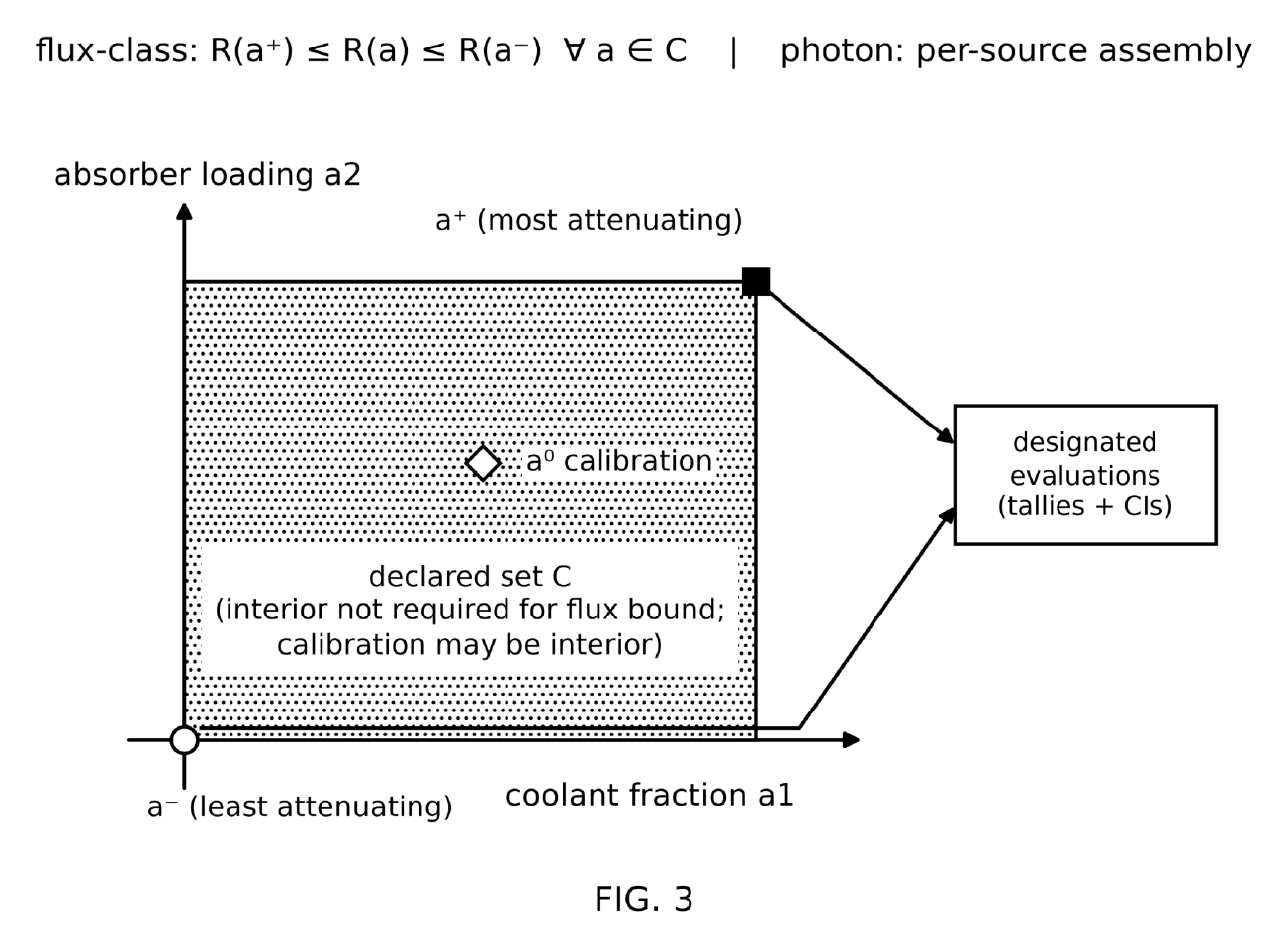
Illustrative shielding-composition set with proposed least- and most-attenuating corners and optional interior calibration evaluations; these choices do not establish coverage of the full set.
Full size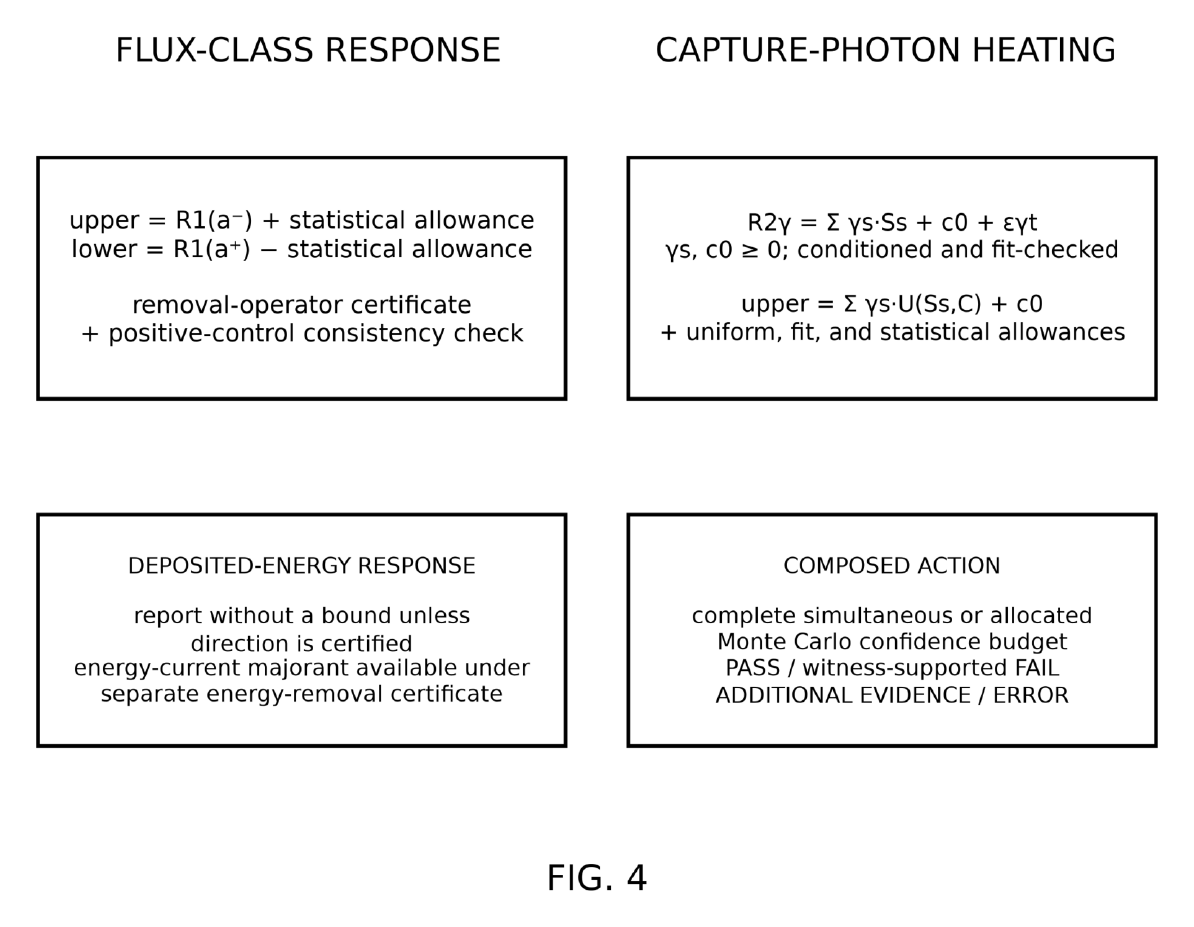
Proposed response-specific construction for flux-class, capture-photon heating, and deposited-energy responses, followed by joint-confidence checks that remain to be implemented and validated.
Full size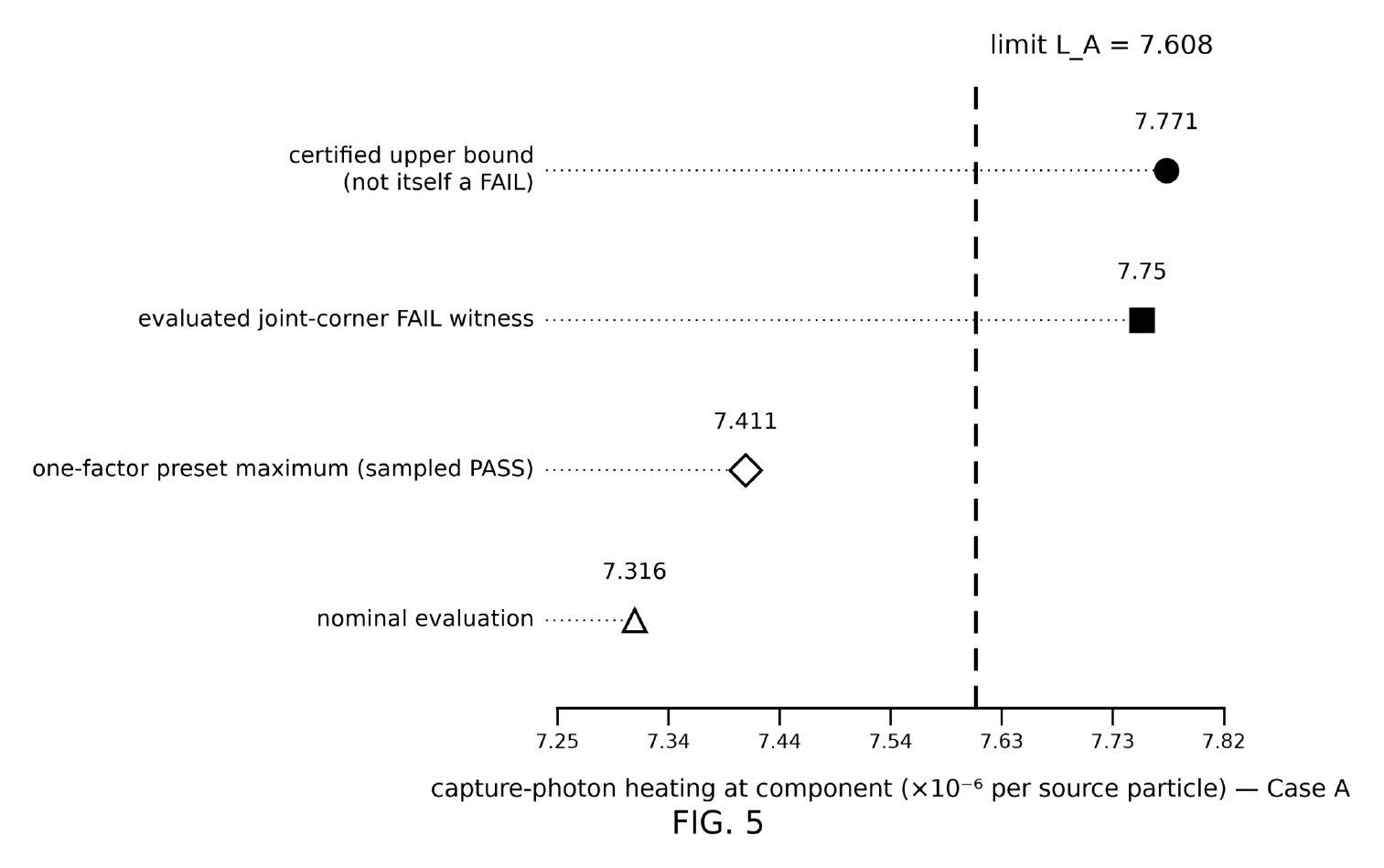
Illustrative heating case in which a joint-corner witness exceeds a limit although one-factor samples pass; this is a conceptual example, not a validated transport result.
Full size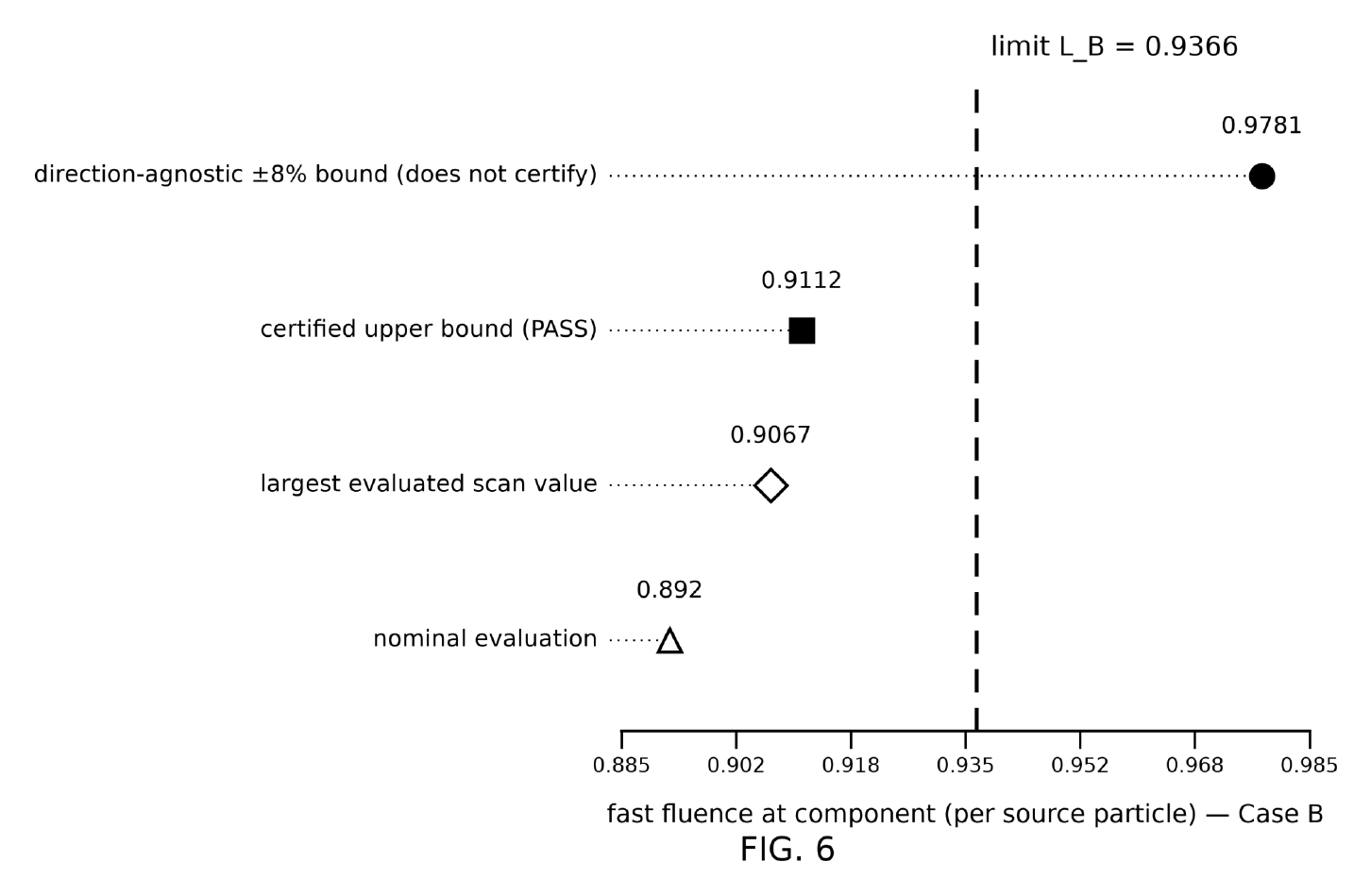
Illustrative proposed case in which a candidate upper bound lies below the displayed limit; this does not show a validated or certified shielding result.
Full size